
Lotus Lantern Festival 2026 Lights Up Seoul with Robot Monks
Lotus Lantern Festival 2026 has transformed Seoul into a glowing hub of spirituality, culture, and futuristic technology as thousands gathered to celebrate Buddha’s birthday in South Korea. The centuries-old Buddhist festival drew international attention this year after four humanoid robot monks joined the colorful lantern parade, creating a rare blend of ancient tradition and modern innovation.
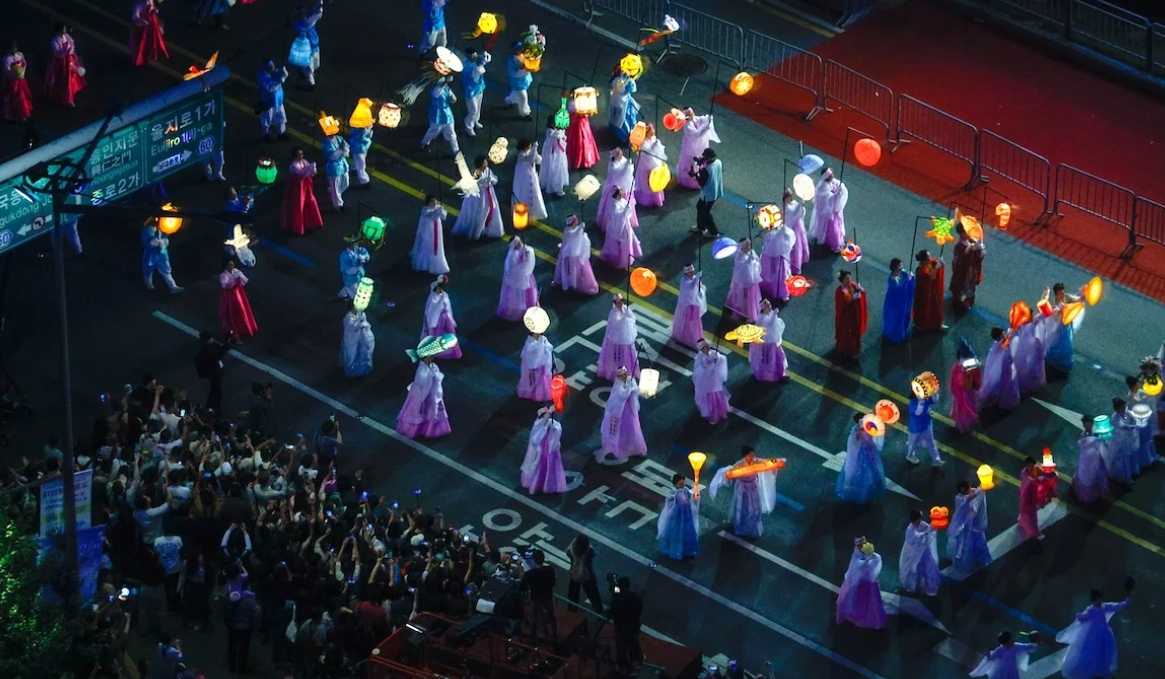
The three-hour parade, held on Saturday, featured nearly 20,000 participants from more than 60 organizations. According to festival organizers, around 500,000 visitors and participants attended this year’s celebrations — a major increase compared to previous years. The streets of Seoul were illuminated with vibrant lotus lanterns, traditional Korean performances, and cultural displays that turned the capital into a city of lights.
Robot Monks Become Main Attraction
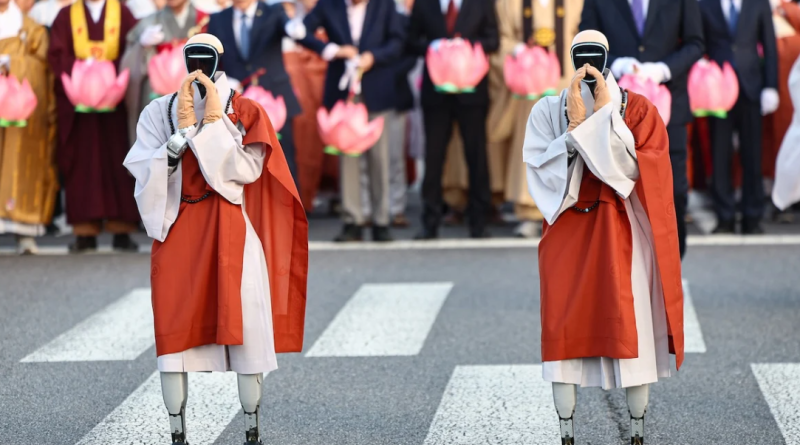
The biggest attraction of Lotus Lantern Festival 2026 was the appearance of four robot monks named Gabi, Seokja, Mohui, and Nisa. Wearing traditional Buddhist robes, the humanoid robots participated in the parade by greeting spectators, waving their hands, and making prayer gestures with folded palms.
Two additional autonomous wheeled robots accompanied them, displaying messages such as “Healing” and “Hope.” The combination of robotics and spirituality quickly became one of the festival’s most talked-about moments, especially among younger visitors in South Korea.
Earlier this year, the robot monk Gabi gained media attention after taking part in a Buddhist religious ceremony in South Korea. Its participation in the country’s historic lantern festival has now attracted global interest.
Buddha’s Birthday Celebrated with Traditional Ceremonies
In South Korea, Buddha’s birthday is celebrated as “Bucheonim Osin Nal,” meaning “The Day Buddha Came,” and is observed as a national holiday. The celebration falls on the eighth day of the fourth month of the lunar calendar, usually in May. This year’s official religious ceremonies are scheduled for May 24.
Venerable Jinwoo, head of the Jogye Order of Korean Buddhism, addressed festival participants during the event, saying:
“By following the light of truth shown by Buddha, we must light the lamp of peace within ourselves and spread harmony to remove darkness from the world.”
He also emphasized the importance of meditation, saying it helps people discover inner wisdom and use that wisdom for the welfare of society and humanity.
A 1,200-Year-Old Cultural Heritage
The history of the Lotus Lantern Festival dates back more than 1,200 years to the ancient Silla Kingdom. Historical records show that the Korean royal court celebrated lantern festivals as early as the ninth century.
In 2020, UNESCO recognized the festival as an Intangible Cultural Heritage of Humanity. UNESCO described the event as more than a religious celebration, calling it a cultural tradition passed down through generations that promotes peace, compassion, and social harmony.
South Korea currently has 21 cultural traditions listed by UNESCO, including kimchi-making traditions, Arirang folk songs, and Pansori musical storytelling.
International Communities Add Diversity
This year’s Lotus Lantern Festival 2026 also saw participation from expatriate communities from Bangladesh, Myanmar, Nepal, Thailand, and several other countries. Participants wore traditional clothing from their home countries and carried uniquely designed lanterns, making the parade more colorful and internationally diverse.
The participation of Bangladeshi communities attracted special attention among South Asian audiences and helped create a vibrant multicultural atmosphere throughout the festival.
Festival Returns Fully After Pandemic Years
South Korea’s largest lantern festival usually attracts around 300,000 visitors every year. In modern history, the festival has only been canceled four times due to political unrest and the COVID-19 pandemic.
The event was suspended in 2020 and 2021 because of the coronavirus outbreak. Although limited celebrations were held afterward, this year marked the festival’s full-scale return.
Organizers say they hope the festival will continue spreading messages of peace, compassion, and humanity while strengthening its reputation as one of the world’s most remarkable cultural celebrations.