
Myanmar Buddhist monk torture sparks global outrage
YANGON: — Fresh allegations of Myanmar Buddhist monk torture have triggered intense global concern following reports that a senior religious leader was severely brutalized and interrogated while in military custody in northern Kachin State.
According to independent local media outlets, U Ke Thara, the 54-year-old chief abbot of a monastery located in Mogaung Township, was detained and subjected to violent interrogation tactics after refusing to comply with demands from military-aligned forces.
The independent news agency *Myanmar Now* reported that U Ke Thara, who was ordained into the monkhood nearly 30 years ago, was arrested following his refusal to allow his monastery to be used as a military outpost. The base was sought by the Shanni Nationalities Army (SNA), an ethnic armed group closely allied with the ruling military junta.
Pro-democracy sources familiar with the matter revealed that SNA operatives had approached the abbot multiple times seeking permission to quarter their troops inside the sacred compound. Following his consistent refusals to compromise the monastery’s neutrality, armed fighters in a vehicle convoy broke through the gates deep at night and abducted him.
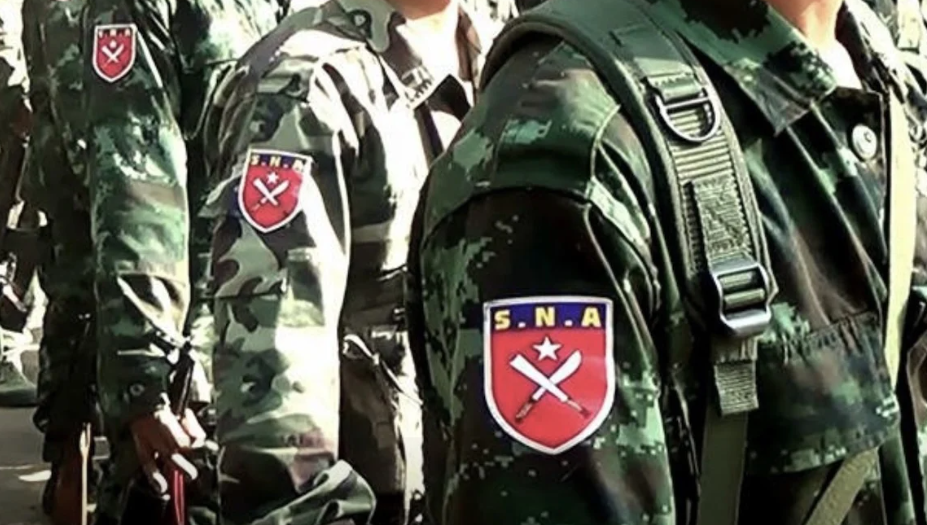
Myanmar Buddhist monk torture highlights escalating crisis after coup
Since the military coup on February 1, 2021, political violence across Myanmar has escalated exponentially. The military junta declared a state of emergency after deposing and detaining democratic leaders, including President Win Myint and State Counsellor Aung San Suu Kyi, alongside top officials of the National League for Democracy (NLD).
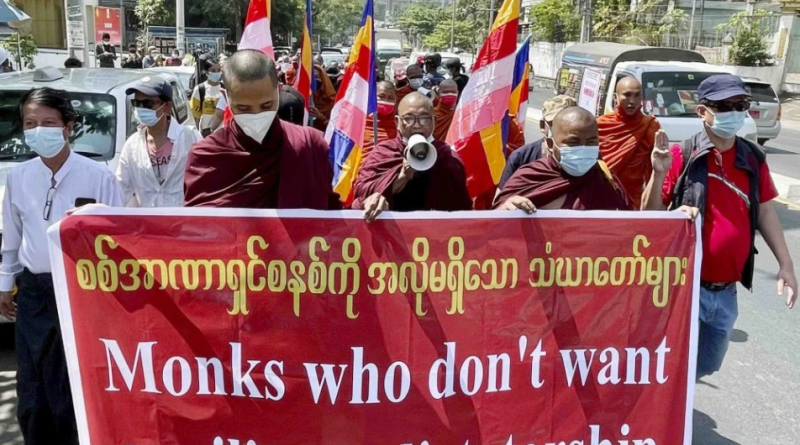
In the wake of the takeover, widespread civil disobedience, brutal crackdowns, and full-scale armed conflicts have engulfed the country. Human rights watchdogs have repeatedly warned that even religious leaders are no longer safe from state-sanctioned violence. The latest incident of Myanmar Buddhist monk torture underscores the collapsing rule of law and the shrinking space for religious neutrality.
Reports state that U Ke Thara was initially transported to a military encampment in Kahnyinmyaing village before being transferred to the Military Operations Command-3 headquarters in Mogaung. Local witnesses allege that interrogators subjected him to severe physical assault and forced defrocking, a deeply humiliating act in Theravada Buddhism.
Conversely, pro-junta social media channels claimed that a raid on the monastery uncovered a walkie-talkie and tickets for the “Spring Lottery”—an underground fundraising initiative supporting the anti-coup resistance movement. These claims, however, could not be independently verified.
Furthermore, military authorities accused the abbot of maintaining clandestine ties with the Kachin Independence Army (KIA). A source close to the KIA strongly denied the allegation, stating that while the abbot had no structural ties to the armed group, he was an open supporter of the ousted NLD government and had publicly advocated for the party in the 2015 and 2020 general elections.
The United Nations reports that since the 2021 coup, thousands of civilians have lost their lives, and millions remain internally displaced. Due to ongoing conflicts, nearly 40 percent of Myanmar’s total population is now entirely dependent on humanitarian aid.
Human Rights Watch stated in a recent briefing that the junta’s systematic suppression has pushed the nation’s economic, social, and humanitarian infrastructure to the brink of collapse. The organization noted alarming increases in the recruitment of child soldiers, along with the widespread deployment of cluster munitions and landmines.
According to the Assistance Association for Political Prisoners (AAPP), as of April, the total documented civilian fatalities under the junta have surpassed 8,000 individuals, which includes more than 1,000 children. Additionally, over 31,000 people have been arbitrarily arrested and detained.
Theravada Buddhism is widely recognized as the foundational pillar of society in Myanmar, with the latest census indicating that over 91 percent of the population identifies as Buddhist. Political analysts warn that continuous reports of **Myanmar Buddhist monk torture** break deep structural taboos and are bound to severely worsen the religious, social, and political fissures tearing the nation apart.