Rangkut Banashram is one of the oldest and most historically significant Buddhist pilgrimage sites in Ramu, Cox’s Bazar. Surrounded by green hills and a peaceful natural environment, the monastery attracts tourists, researchers, and Buddhist devotees from different parts of the world because of its ancient heritage, Buddhist sculptures, and legends connected to Emperor Ashoka.
Where is Rangkut Banashram and Why is it Famous?
Traveling a few kilometers south from Ramu Chowmuhani in Cox’s Bazar, visitors can spot the historic Rangkut Banashram Mahatirtha Bihar near the banks of the Bakkhali River. The grand entrance gate of the monastery stands beside the road, welcoming visitors to one of the region’s most important Buddhist heritage sites.
According to local accounts and preserved records, Emperor Ashoka established several stupas and Buddhist monuments across the Indian subcontinent after embracing Buddhism and spreading the message of peace and nonviolence. Rangkut Bihar is believed to be one of those historic religious establishments.
The History Behind Rangkut Bihar
Local Buddhist monks believe the monastery was founded around 268 BCE. The word “Rang” is said to mean the chest relic of Buddha, while “Kut” refers to a hilltop or mountain peak. Together, the name “Rangkut” symbolizes a hill associated with Buddha’s sacred relics.
Historical narratives also mention that King Chandrojyoti of Arakan placed a sacred chest relic of Gautama Buddha inside a stone Buddha statue around 308 BCE. Although the site remained neglected for centuries, it was reportedly rediscovered in 1930 by a Burmese monk named Jagat Chandra Mahathera through ancient manuscripts and historical documents.
Major Attractions Inside the Monastery
Visitors entering the monastery first notice a pathway lined with 84 bronze Buddha statues, creating a calm and meditative atmosphere known as “Buddhanagar.”
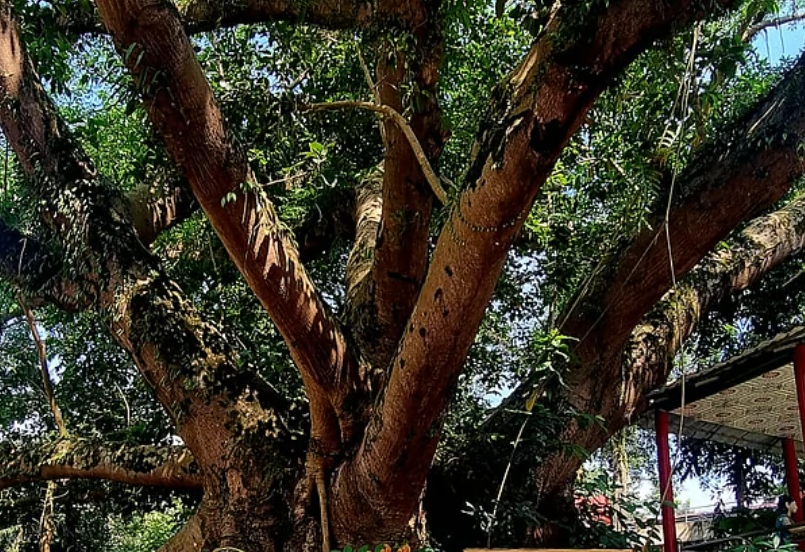
The complex also features a museum that preserves ancient manuscripts, inscriptions, sculptures, and Buddhist artifacts from different centuries. Beneath a giant banyan tree inside the premises stand statues of Emperor Ashoka and Xuanzang.
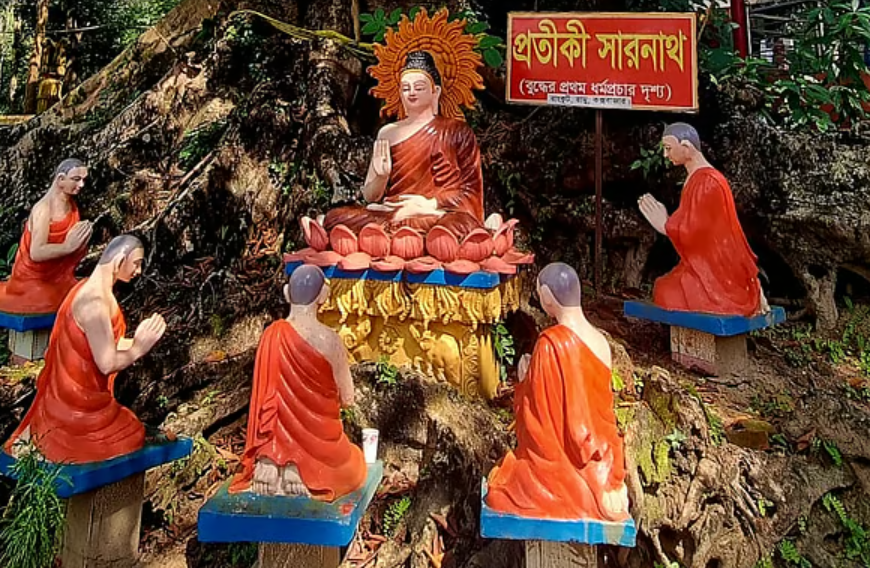
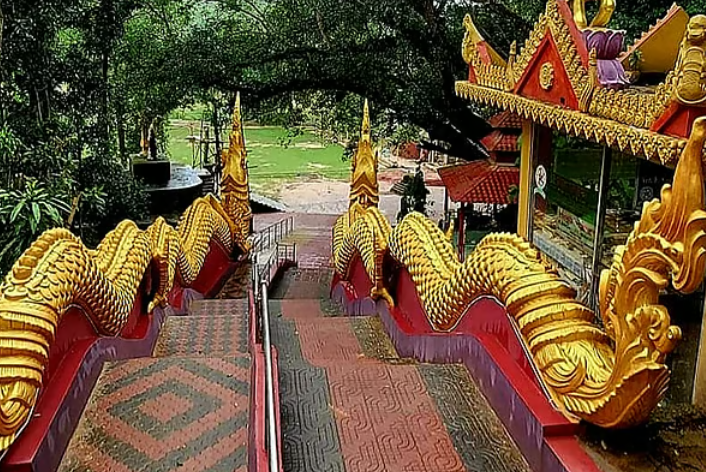
Other attractions include symbolic sculptures depicting Buddha’s first sermon and the birth of Prince Siddhartha. A decorative dragon gate leads visitors to a staircase with 67 steps that ascends toward the main hilltop monastery.
The Legend of Buddha’s Sacred Relic
At the top of the hill stands the central Buddhist shrine, where a valuable black stone Buddha statue is preserved. According to the monastery authorities, the statue contains a sacred chest relic of Gautama Buddha, making the site spiritually important to Buddhists around the world.
Monks at the monastery also claim that Gautama Buddha once visited this hill with his disciple Ananda and predicted that a sacred Buddhist shrine would one day be established there.
A Growing International Tourist Destination
Today, Rangkut Banashram is not only a religious site but also an emerging tourist attraction in Bangladesh. Every year, the monastery hosts the “Buddha Barsha Baran” festival in May, drawing thousands of devotees and visitors from across the country.
According to visitor records, tourists, researchers, diplomats, and representatives from countries including Russia, China, Sri Lanka, Thailand, Vietnam, Italy, and Australia have visited the monastery over the years. Their presence has helped increase the international recognition of the historic Buddhist site.
Visiting Information for Tourists
Rangkut Banashram remains open to visitors every day from 7:00 AM to 6:00 PM. Visitors are required to purchase entry tickets, and the collected funds are used for the maintenance and preservation of the monastery.
With its peaceful hilltop surroundings, ancient Buddhist heritage, and deep historical significance, Rangkut Banashram has become one of the most remarkable Buddhist pilgrimage and tourism destinations in Bangladesh.
Read More>>: Rangkut Banashram: The Ancient Buddhist Pilgrimage Site of Ramu Linked to Emperor Ashoka